
A 2025 Eagle Hill Consulting survey found that 55% of U.S. employees are experiencing burnout, while depression alone costs U.S. employers billions of dollars annually in lost productivity. Overall, low employee well-being that shows up as burnout costs businesses $322 billion in turnover and lost productivity.
Gallup’s economic research further illustrates the connection between employee well-being and organizational outcomes. Well-being reliably predicts future absenteeism, performance, healthcare use, engagement, and turnover. Gallup also finds that employees who strongly agree that their organization cares about their overall well-being deliver better results.
In response to these challenges, employers are increasingly recognizing employee well-being as a key driver of business performance. Rather than relying solely on traditional wellness perks, such as gym memberships, CEOs are integrating well-being into everyday operations through more intentional programs and workplace practices. This broader approach recognizes that supporting workforce health can help organizations build long-term business success and stronger recovery from disruption.
Employees who are thriving in their well-being are 46% less likely to experience frequent burnout and 65% less likely to watch for or actively seek a new job. – Gallup
What Is Employee Well-Being?
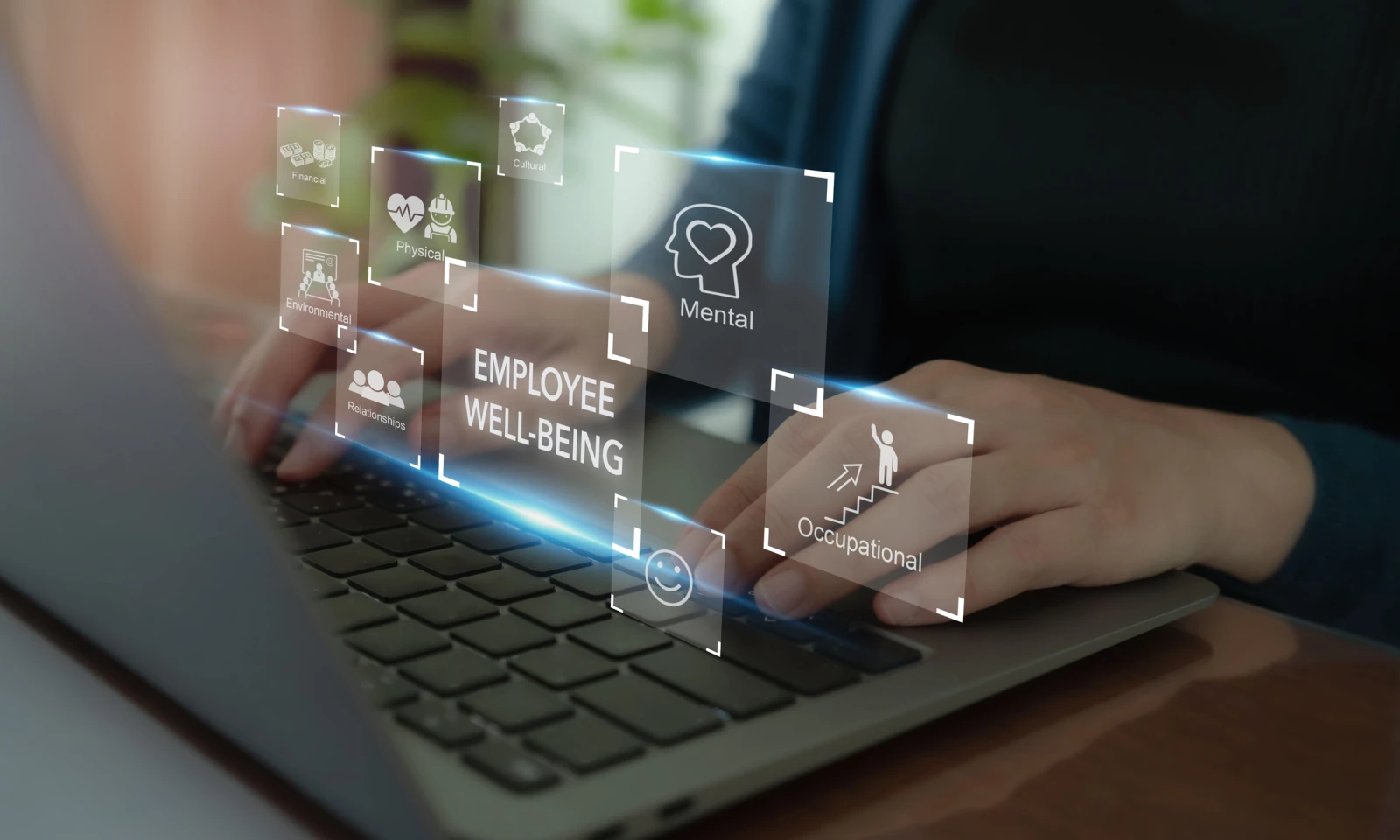
Employee wellness programs often focus on specific aspects of health, such as physical fitness or preventive care. Employee well-being takes a broader view. At Heffelfinger Company, we look at employee well-being through four interconnected dimensions, with each playing a role in how employees engage with their work and the workplace:
1. Physical well-being: Maintaining employee health and safety through ergonomic workstations, access to healthcare and preventive care, nutritional support, and opportunities for regular physical movement or exercise.
2. Mental/emotional well-being: Supporting psychological health, stress management, and emotional resilience by fostering psychological safety and providing access to mental health resources or employee assistance programs (EAPs).
3. Financial well-being: Helping employees create a sense of stability and security regarding personal finances.
4. Social well-being: Building positive workplace relationships, teamwork, collaboration, and a sense of community and belonging.
Gallup research shows that as employees experience more elements of well-being, risk factors such as stress, burnout, and negative daily emotions decline. Employers have a role to play in providing resources that support employees across each dimension of well-being.
Physical Health Support
Investing in employee physical health can help businesses reduce preventable health issues and improve productivity. When employees have easier access to routine and preventive care, they may be more likely to address health concerns before they become more serious.
Many companies are looking beyond traditional health insurance to make preventive and routine care more accessible. Direct primary care (DPC) is one growing option that gives employees access to primary care providers through a membership-based model, often with more convenient appointments and predictable costs.
Physical health support additions in 2026 include:
Direct primary care memberships
Fertility coverage and expanded parental leave benefits
Caregiver support
Expanded preventive care and health screenings
Telehealth and virtual primary care access
Fitness and wellness stipends
Ergonomic workplace improvements and movement initiatives
Mental/Emotional Health Support
When businesses invest in employee mental health, the benefits extend beyond individual well-being to workplace productivity and retention. And it shows in the ROI: the World Health Organization estimates that every $1 invested in treatment for depression and anxiety generates a $4 return in improved health and ability to work.
As employee expectations evolve, mental health support is becoming a standard workplace benefit rather than an added perk. Millennial and Gen Z employees, who may feel less stigma around seeking mental health support than previous generations, are increasingly looking to employers for accessible mental health resources that help them manage stress and improve well-being.
Mental health support additions in 2026 include:
Manager training to identify burnout
Flexible schedules to reduce stress
Telebehavioral health access
Expanded EAP services
Wellness stipends or mindfulness tools
Financial Wellness Support
When employees have access to resources that help them manage expenses and navigate financial challenges, they may experience less financial strain and greater peace of mind at work.
Many companies are expanding financial wellness programs beyond traditional retirement benefits to give employees more practical support. Flexible spending accounts (FSAs) and health savings accounts (HSAs) can help employees manage eligible healthcare expenses, while financial education and planning resources can support budgeting, debt management, and long-term savings goals.
Financial wellness support additions in 2026 include:
Financial wellness education and coaching
Flexible spending accounts (FSAs)
Health savings accounts (HSAs)
Student loan repayment assistance
Retirement planning and financial counseling
Emergency savings programs
Financial planning and budgeting tools
Social Well-being Support
A positive workplace culture can strengthen employee relationships, encourage collaboration and give employees a greater sense of connection and belonging. When employees feel supported by their colleagues and included in the workplace, they may be more engaged and invested in their work.
Employers can foster social well-being by creating opportunities for meaningful connections and building a culture where employees feel valued and respected.
Social well-being initiatives in 2026 include:
Team-building activities and collaborative projects
Employee resource groups and peer support networks
Mentorship and peer-to-peer development programs
Regular team meetings and opportunities for open communication
Employee recognition programs
Company events and social gatherings
Inclusive workplace practices that encourage connection and belonging
Personalizing Employee Benefits
Employers are also recognizing that a one-size-fits-all approach to benefits may not address the diverse needs of their workforce. Employees value flexibility and the ability to choose benefits that reflect their individual circumstances, financial priorities, and stage of life. Offering customizable benefits allows organizations to provide more relevant support while demonstrating a commitment to employee well-being.
For example, employees early in their careers may place greater value on mental health resources or student loan assistance, while parents may prioritize childcare benefits and expanded health coverage. Mid-career professionals may be more interested in retirement planning and financial wellness programs.
Create a Culture of Well-Being with Heffelfinger
Employee well-being should not be viewed as an added workplace perk, but as a core leadership responsibility. Supporting employee well-being requires leaders to make it an ongoing part of business operations by shaping workplace practices and policies that support employees' physical, mental/emotional, financial, and social health.
At Heffelfinger Company, we help organizations turn their vision for a workplace that inspires hard work and loyalty into meaningful, lasting change. We start with tools like the Employee Passion Survey that measures whether employees’ needs and motivations are being met. These insights help inform our work in strategic visioning, cultural assessments, organizational alignment, and leadership development, as we equip leaders to support employee well-being and sustain business performance.
Your people are one of your organization's greatest assets. Let's create a business playbook that helps your employees thrive and positions your organization for long-term success. Contact us today to schedule a free 20-minute work audit.
Warmly,
James & Lori
James Jackman & Lori Heffelfinger
Sources:
SHRM Labs. 3/28/2024. Optimizing for Employee Well-Being: A Holistic Approach for HR Leaders. https://www.shrm.org/labs/resources/optimizing-for-employee-well-being-a-holistic-approach-for-hr-leaders. Accessed 11/6/2026.
Focus HR. 2/15/2026. Small Business Benefits in 2026: What’s Changing — and What Smart Employers Are Doing About It. https://focushr.net/small-business-benefits-in-2026-whats-changing-and-what-smart-employers-are-doing-about-it/. Accessed 11/6/2026.
Gallup. Employee Wellbeing: What It Is, Why It Matters and How to Improve It. https://www.gallup.com/workplace/404105/importance-of-employee-wellbeing.aspx.aspx. Accessed 11/6/2026.