
Effective strategic planning turns vision into results. Research shows that companies with written business plans grow 30% faster (Journal of Management) and 71% of fast-growing companies have strategic plans, business plans, or similar long-range planning tools in place (Journal of Small Business Management and Bplans). Yet, building a strategy and assuming it will provide all the answers isn’t enough because change is inevitable. Even a gentle shift in the winds can bring unexpected obstacles, including evolving customer needs, new competitors, economic uncertainty, or HR challenges within the organization. The organizations that succeed are those that adapt without losing sight of their destination.
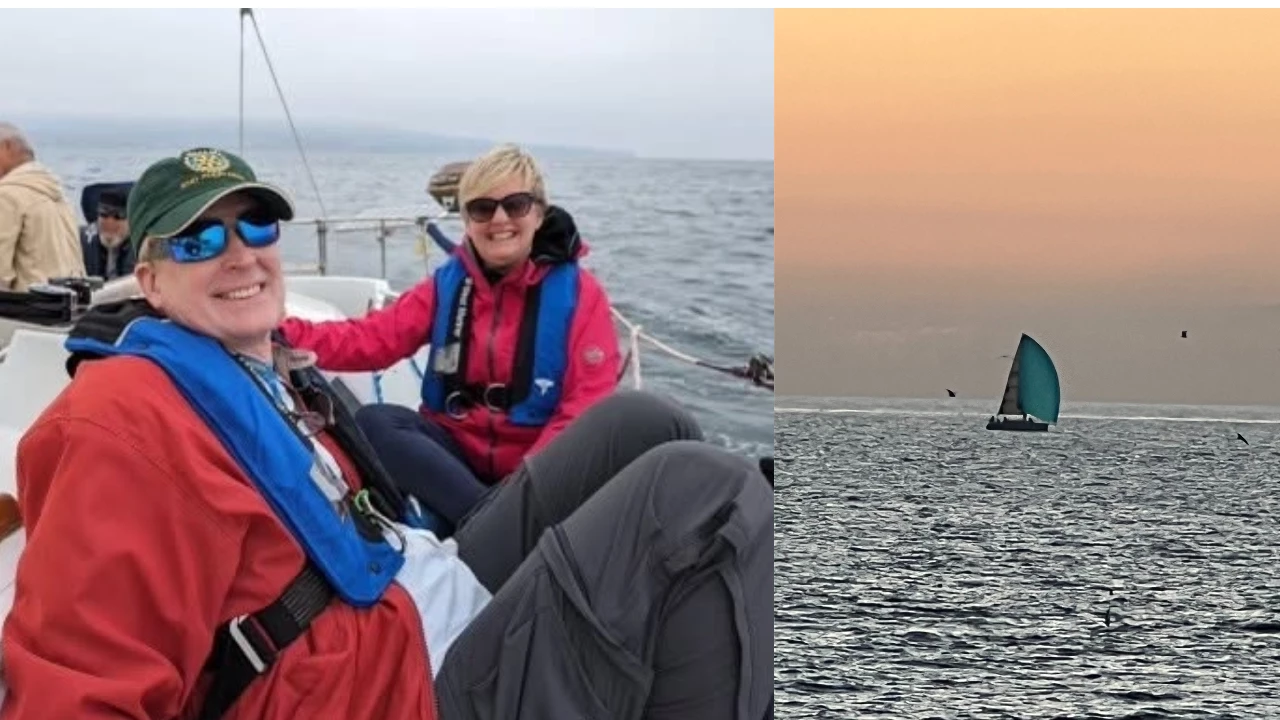
For James and Lori, some of the best lessons they have learned about strategic leadership come from experiences on their sailboat. Years of navigating unpredictable conditions and complex decisions on the water have reinforced an important leadership principle: the best strategies provide direction while leaving ample room to adapt.
Finding a Balance Between Strategy and Agility in the Face of Change
An effective sailing strategy requires balance between preparation and flexibility. Before setting out, sailors develop a float plan by studying weather conditions, charts, tides, currents, equipment, and crew capabilities. Then politics shift, an unexpected change in weather occurs, the wind falls off or picks up, or one of the systems on the boat fails without warning. Suddenly, the planned route may no longer be the safest or most effective option.
In business, leaders spend significant time studying the market to understand customers and analyze the competition. The findings are used to identify opportunities and create strategies designed to achieve organizational goals. Then the market changes, the internal environment changes, or a flaw is discovered in the product or service, causing a delay in a rollout or launch or a disruption in business revenues, expenses, or income. Without adequate scenario planning or testing, the whole strategy can fall apart.
Lori often draws parallels between the lessons she has learned while sailing and the challenges leaders face in business. She explained, “We’re sailing from Cypress to Athens this month. We know our general direction because of the prevailing winds at this time of year, but that could change. To be effective, a strategic plan for a business or a float plan for a sailboat needs to be viewed as a working plan that will be reviewed, monitored, and updated as needed rather than created and left to gather dust on a shelf. It takes a certain kind of leadership to be both strategic and flexible in the boardroom or on a sailboat. It’s about balancing strategy, speed, adaptation, and control.”
For executives, that means letting go of the idea that every outcome can be predicted. Effective strategic planning is about creating alignment around a direction while building the agility needed to respond when conditions change.
Great Leaders Prepare for Change Before It Happens
Effective leaders and captains understand that flexibility is a necessary part of executing a successful strategy. Neither waits until they encounter rough waters to start thinking about solutions. They anticipate challenges, prepare their team/crew, and create contingency plans. These leaders/captains are constantly monitoring small changes in the environment: i.e., changing market conditions, social/political trends, technology/innovations, changing customer patterns) or similarly for sailors: wind, weather, tides, safe harbors, etc.
Few events illustrate the importance of contingency planning more clearly than the COVID-19 pandemic. “Many businesses had to adjust their people strategy and some, their entire business strategy when the pandemic hit the world,” explained James. “So many companies had only one mode of operation: in-office or on location. As soon as the pandemic began, leaders had to make decisions with incomplete information while guiding their teams through uncertainty. They had to shift their established strategy and, in the process, became flexible in the face of adversity.”
During the pandemic, the strongest organizations were those that could adapt without losing sight of their purpose. Sailing demands the same mindset. Even with an excellent float plan, sailors must constantly adjust to changing conditions.
A Strategy Is Only as Strong as the People Who Execute It
Hiring talented, motivated employees with the right skills is part of the equation, but organizations must also provide the training and support needed to execute responsibilities with confidence and navigate unforeseen challenges.
Instead of assuming people know what to do, effective leaders take the time to clarify expectations and provide support and training in advance so their teams are prepared for changing demands.
James and Lori see a similar dynamic on the water. When sailing far from shore, captains cannot simply replace crew members when circumstances change. Everyone must understand their responsibilities before conditions become challenging. As James explained, one experience reinforced just how important training and preparation really are:
“A couple of years ago I was the captain on a boat, and we ran into high winds as we were coming into the harbor. When it came time to lower the mainsail, I realized I needed to manage and physically stow it myself because of the conditions. My mistake was putting someone on the helm and assuming they understood both the terms for the task and how to keep the boat pointed into the wind (a difficult task in high winds). They didn't, because I hadn't adequately trained them. The mistake was mine.”
Emotional Intelligence Helps Leaders Navigate Challenging Conditions
Sailing has also reinforced the importance of emotional intelligence in leadership for James and Lori. They have observed situations where captains become frustrated with their crews when things don’t go according to plan. These experiences have taught them that the best captains remain calm under pressure because they seek to understand the factors contributing to a problem before reacting.
James shared additional observations from his sailing experience: “On top of the lack of training and preparation, to be heard over the wind, I had to yell my commands. (I did not have walkie-talkies with us.) The work did not go well, but, in the end, we got the sail down and stowed. I had lost my cool; I was not kind in my words or my thoughts, and it came through in my tone. I had a lot of apologizing to do afterward. I learned a lot about making sure everyone can perform the duties I ask them to do, and taking the time to discuss the tasks to be performed and why they need to be done in a particular way.
By contrast, I recently sailed with a friend and mentor. His demeanor throughout the trip was one of being nonplussed by my blunders. He made gentle reminders even when we were moving too fast toward the fuel dock. I am practicing that calmness – not an easy task when the situation seems dire.”
James and Lori have learned to ask questions before making assumptions. Lori explained, “Before we comment to ourselves on a situation where tempers flare on a boat, we ask: What is causing that behavior? Is it a lack of tools or equipment (radio, walkie-talkies)? An inexperienced crew (lack of training)? Has the captain forgotten what it really takes to do the work at hand? Or is it possibly a captain that is struggling with the conditions they are trying to control? We feel that it is often a combination of all of these factors, and if the captain had taken the time to mitigate one or two of these weaknesses, the boat would be docked/moored with less upset.”
The same questions apply in business. When leaders become frustrated with their teams, it is important to examine what may be contributing to the situation before reacting. Did employees receive the training they needed? Were expectations clear? Did the leader create the conditions for success?
Strategic Visioning Helps Leaders Navigate What Comes Next
The most successful organizations have learned to embrace and navigate change. Like experienced sailors, effective leaders understand their destination, prepare their teams, monitor changing conditions, and adjust their approach when needed.
At The Heffelfinger Company, James and Lori help executive leaders and leadership teams strengthen their ability to create and execute strategies that are both visionary and adaptable.
Through strategic visioning, leadership coaching, and team development, they help organizations:
Align leaders around a shared vision and strategic direction
Improve decision-making in times of uncertainty
Build stronger communication and accountability
Develop leaders who can adapt while maintaining focus
Create strategies that evolve with changing business conditions
Contact The Heffelfinger Company today to learn how strategic visioning can help your leadership team create a clear direction and successfully navigate change.
Warmly,
James & Lori
James Jackman & Lori Heffelfinger