
A talented team can make challenging work look easy. But technical expertise alone rarely determines whether a team succeeds. The attitudes and behaviors team members bring to their work, including how they communicate, collaborate, and build trust, are often what set high-performing teams apart. Without that foundation, even highly capable individuals can struggle to work together effectively.
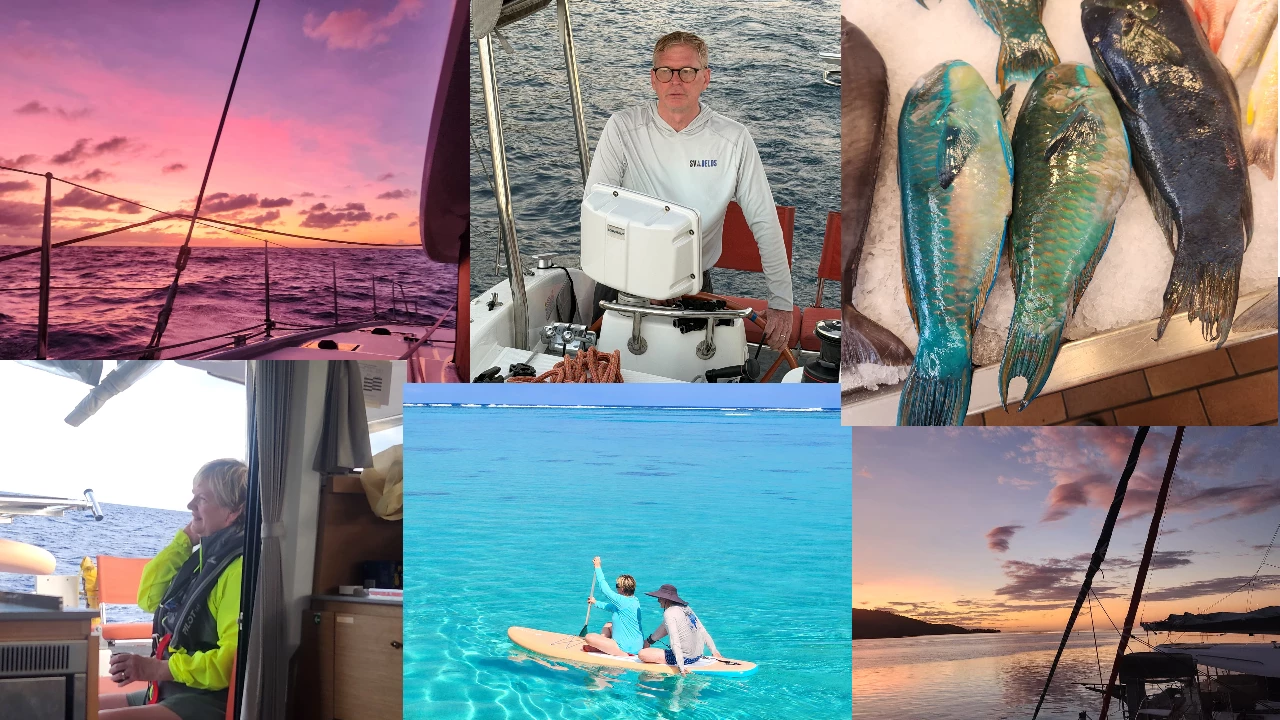
James and Lori experienced this firsthand during a September sailing trip through French Polynesia, where they joined a flotilla of four catamarans navigating between islands over seven days and six nights. Although the crew members had never met in person before the trip, they worked together successfully in demanding conditions, from sailing overnight and navigating around reefs to sharing meals and chores in a compact living space.
The experience reinforced a lesson James and Lori emphasize in their work as leadership coaches, which is that high-performing teams do not happen by accident. Teams succeed when leaders bring the right people together, establish clear expectations, and build a culture of trust where people feel comfortable sharing ideas and asking questions.
“Not finance. Not strategy. Not technology. It is teamwork that remains the ultimate competitive advantage, both because it is so powerful and so rare.” - Patrick Lencioni, in his classic book, The Five Dysfunctions of a Team.
How a Successful Sailing Team Demonstrated the Power of Effective Leadership
The crew was assembled by the flotilla organizer based on sailing experience and skill levels. Many of the crew assigned to work with James and Lori brought substantial expertise, including experience with ocean crossings and long-distance races. James served as skipper, while Lori took the role of first mate. Both were stepping into new leadership challenges, including learning the boat, understanding the local conditions, and getting to know their crew.
James and Lori recognized that their crew members had skills and experience that sometimes exceeded their own. Rather than viewing this as a threat to their authority, they treated it as an advantage. Lori reflected on what made the experience successful: “We had the dream team. They were so talented. And we treated each other well. This boat was amazing. There was no talk about the how, but lots of talk about the what and why.”
The distinction matters in business, too. Organizations often invest heavily in recruiting talented people, then fail to fully leverage their abilities. To thrive, team members need mutual respect, a shared understanding of their purpose, and the freedom to contribute their knowledge.
Leaders who surround themselves with capable people and actively seek their input can make better use of the talent they have. Effective leadership is ultimately about bringing people together to achieve results they could not accomplish as effectively on their own.
Use GRIP to Establish Alignment Before Work Begins
Before departing for Tahiti, the crew exchanged several WhatsApp messages and held a one-hour Zoom meeting. That initial planning time gave everyone an opportunity to introduce themselves, ask questions, share expectations, and discuss how they would work together.
Lori took the lead in organizing food preparations and facilitating conversations about what would make the trip a positive experience for each person. The group also began discussing responsibilities and addressing concerns before boarding the boat.
These conversations reflected the GRIP framework that leaders can use when assembling a new team or launching a project. The framework helps teams establish four essential elements of alignment:
1.Goals: Agree on the project's purpose and desired outcomes. On the water, that meant understanding the destination and what the crew wanted from the experience. In business, it means clarifying what success looks like and making sure everyone understands the priorities.
2.Roles: Determine who will do what. Clear responsibilities reduce duplication, prevent tasks from being overlooked, and help people understand where they can contribute most effectively.
3.Interpersonal relationships: Decide how the team will work together, including how members will communicate, make decisions, and manage conflict. Establishing these expectations early creates a foundation for trust and productive disagreement.
4.Processes: Identify the practical systems and routines required to get the work done. For the sailing crew, this included safety procedures, meal preparation and cleanup, communication with other boats and ports, boat systems, and night-shift rotations. Business teams face similar needs, from decision-making protocols and meeting practices to reporting systems and escalation procedures.
GRIP gives teams a structured way to address questions that are easy to overlook when everyone is eager to begin. Instead of assuming people share the same expectations, leaders make those expectations explicit.
Understand What Each Team Member Needs to Succeed
Effective leaders recognize that people bring different priorities and boundaries to a shared endeavor. Those differences can either become sources of conflict, or they can help a team develop a more thoughtful and effective approach when they are openly discussed.
“We had crew members who absolutely wanted to spend time on the water/in the water and up at night looking at the stars. We had crew members who needed to know what safety equipment we had and how we were going to use it. We had crew members who needed to know specifically what our heading/direction was - and were willing to help us with that. We had crew who wanted to use the sails to the fullest and go as fast as possible, even at night,” shared Lori.
These preferences required the crew to balance individual interests and contributions with collective responsibilities. Understanding what mattered to each person helped James and Lori lead more effectively while creating a better experience for everyone.
The same principle applies to leadership teams. Employees may have different working styles, communication preferences, professional ambitions, and concerns about risk. Leaders do not have to accommodate every preference, but they should understand what motivates their people and what they will need to contribute effectively.
Asking questions early can uncover potential friction before it affects performance. It also signals that each person's perspective matters, which strengthens engagement and shared ownership.
Strong Leaders Know When to Rely on Their Team
Taking responsibility for a team does not mean doing everything independently. In fact, leaders who attempt to carry too much of the workload can undermine both their team's development and their own effectiveness.
On the sailboat, James and Lori needed to depend on the team's expertise and delegate responsibilities according to individual strengths and interests. Their crew members, in turn, recognized that James and Lori were learning and were willing to offer guidance and share their knowledge.
This mutual understanding helped establish a productive dynamic where James and Lori provided leadership and direction, while crew members contributed their experience and took ownership of the work.
The sailing experience highlights an important lesson for executives. Leaders must understand their own capabilities and limitations, just as they need to understand those of their teams. Self-awareness makes it easier to recognize when to ask for support or delegate tasks.
When leaders create an environment where people can contribute without undermining one another's roles, they strengthen the team's collective capacity.
Planning Prevents Avoidable Conflict
Not every crew in the flotilla took the same approach to preparation. On some boats, conversations about responsibilities and expectations were left to chance. As the trip progressed, that lack of clarity contributed to conflict and resentment. Captains sometimes found themselves filling gaps when crew members were absent or disengaged because they weren't aware or willing to pitch in.
Lori shared:
James and I were proud of the fact that we held some of these conversations up front and appreciative of our talented crew who asked a lot of questions, offered a lot of suggestions, and signed up for anything and everything that needed to be done.
The moral of the story if you are a leader of a team:
1. Hire talent as good or better than you and utilize their talent and suggestions to the fullest.
2. Have conversations up front - use GRIP.
3. Understand what's important to your crew/team.
4. Understand your own needs and limitations as a leader.
The Heffelfinger Company Prepares Leaders & Aligns Teams to Drive Sustainable Business Results
At The Heffelfinger Company, we help executive leaders and leadership teams build the alignment, trust, and shared accountability needed to turn individual talent into collective results.
Through our Leadership-Team Alignment services, we work with leaders to clarify goals, strengthen working relationships, establish effective team practices, and address the dynamics that can interfere with performance.
Contact us to book a free, 20-minute team alignment work audit and explore how leadership-team alignment can help your people work together more effectively to achieve your organization's goals.
Warmly,
Lori & James
Lori Heffelfinger & James Jackman